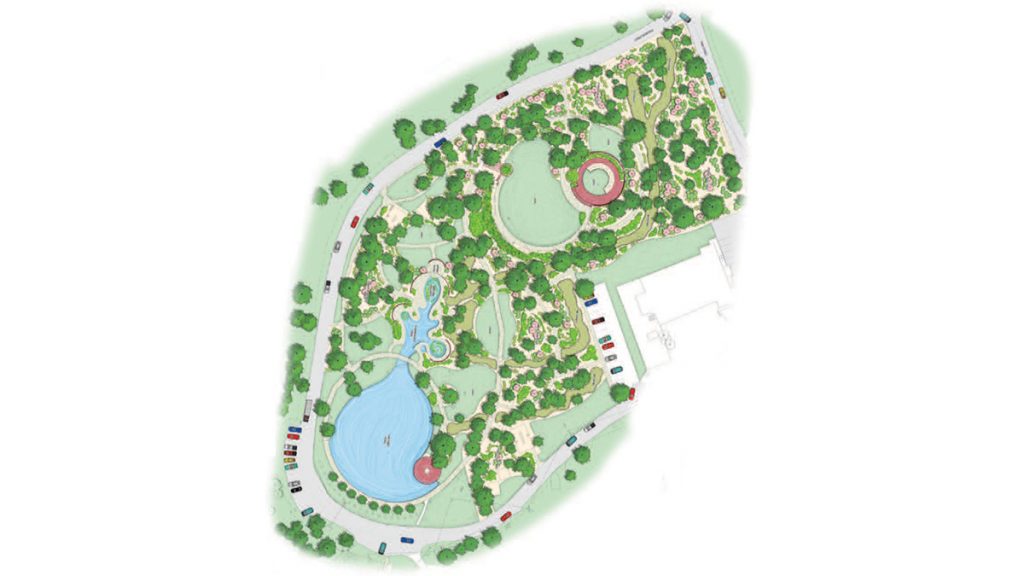
WINNSBORO – Construction has begun on the long awaited Fortune Springs Park Stormwater Project in Winnsboro. A Notice to Proceed was issued on July 31, 2025. Representatives with the South Carolina Office of Resilience (SCOR) gave an overview of the construction and how it will proceed during the Tuesday night Town of Winnsboro Council meeting.
The project’s design finalization and construction is funded by $2,715,569.90 from SCOR’s American Rescue Plan Act (ARPA) Stormwater Infrastructure Program (ASIP). In addition to restoring an existing stormwater pond, new 24-inch drainage pipe and structures, plus improvements to vegetative swales will be implemented in the park.
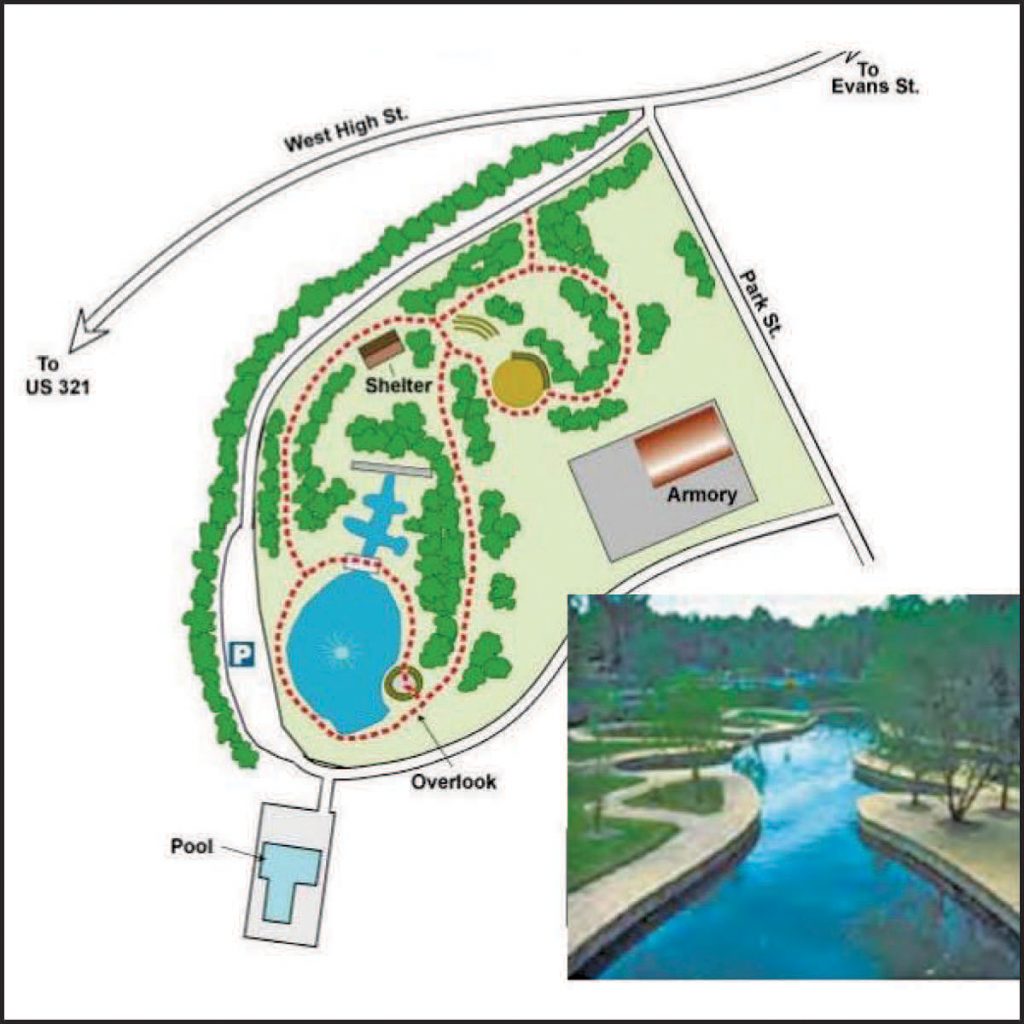
Fortune Springs Park was established immediately following the Revolutionary War and acquired by the Town in 1880. The park includes walking paths, tennis courts, a county-run swimming pool, and an existing stormwater pond.
Severe flooding occurs during rain events and has led to erosion and sediment control issues, making portions of the park inaccessible and unsafe. Additionally, stormwater runoff routinely impacts the historic Old Armory Building, which sits adjacent to the park.
“The Fortune Springs Stormwater Project represents a major investment in the future of our town. This initiative not only addresses long-standing flooding and erosion issues but also preserves and enhances one of Winnsboro’s most historic and beloved parks,” said Winnsboro’s new Mayor Demetrius Chatman. “By incorporating nature-based solutions and improving stormwater infrastructure, we’re making our community safer, more resilient, and better prepared for the challenges ahead. I’m grateful to the South Carolina Office of Resilience for their partnership and support in helping us move Winnsboro forward.”
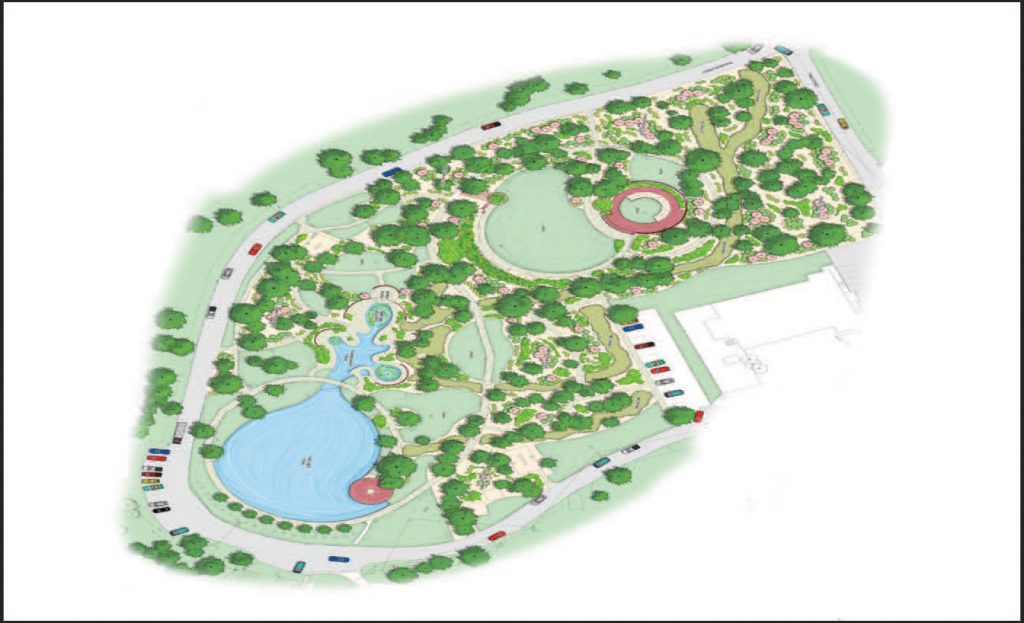
The park is surrounded by several neighborhoods that rely on the recreation opportunities and flood risk reduction potential that the park offers. Notably, nearly two thirds of the households in the service area who are estimated to benefit from reduced flood risks earn low-to moderate-level incomes, said a SCOR official.
“I look forward to the multiple benefits this project will bring to members of the community,” says Representative Annie E. McDaniel, SC House District 41. “By leveraging nature-based solutions, including wetland restoration and other flood risk reduction strategies, the park’s natural beauty is being preserved and revitalized for the citizens of Winnsboro to enjoy.”
“To retain the benefits of green space for stormwater retention, release, and quality improvements, the project will rely heavily on nature-based resilient stormwater improvements,” said SC Chief Resilience Officer Ben Duncan. “These include bioretention swales and wetland cells, which utilize native plant species and strategic grading to channel water away from critical structures.
“Additionally, construction of boardwalks, walkways, parking areas and other drainage improvements will be implemented to enhance the park’s passive recreation elements,” he said.
“Part of this project aims to eliminate the erosion issues to which the park was originally susceptible,” Duncan explained. “This means our environmental impact in Winnsboro will be an improvement, rather than a negative impact.”
Work Flow of Renovation
According to the construction schedule, crews began work in mid-July taking down trees in Section 1 to create bio-swales – channels lined with rock and plantings – that will direct the flow of stormwater and will filter the sediment out at the same time. The bio swales will slow the stormwater flow and keep the sediment from ending up in the pond as it has done in the past.
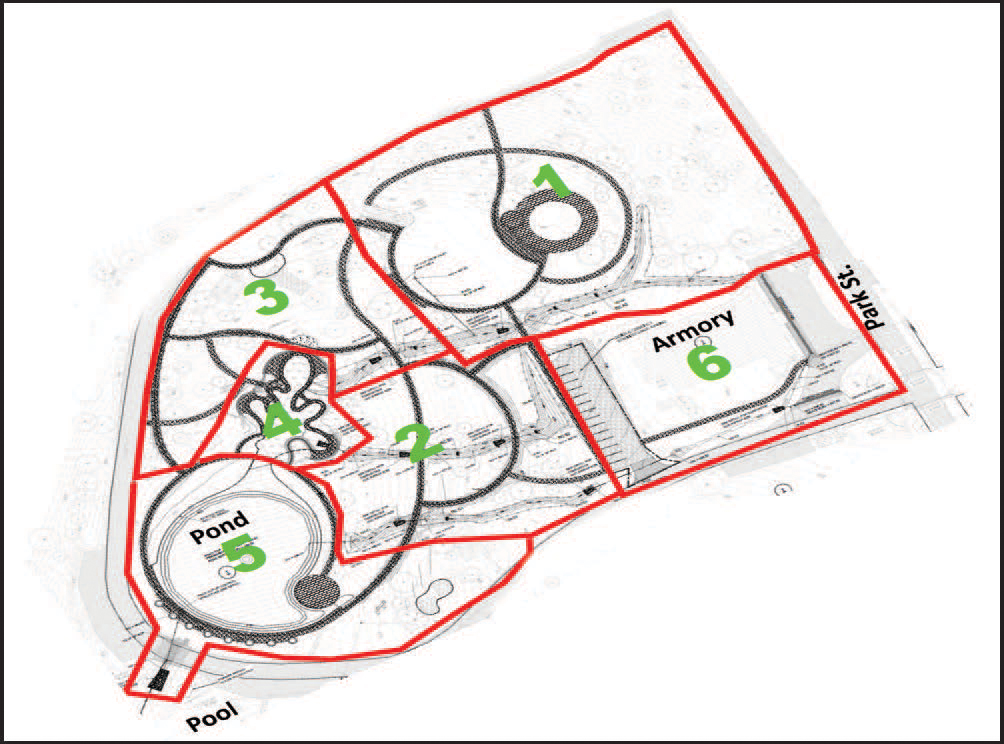
As the work flows from section 1 through section 3, crews will be taking out trees and building bio-swales. They will start at the top of the park where the majority of the stormwater comes in, cuts paths through the soil, and pours downward through the park, taking the sediment and dirt into the pond. So that whole area is where the work will begin.
That’s the first priority in getting the water to move where they want it to move.
After the bio-swales are in place, crews will begin constructing sidewalks and other plantings and paving in the top area.
Along the way, crews will build sidewalks and establish new plantings and trees.
Then crews will move to section four where they will re-establish the wetlands area above the pond. Next, they’ll work on the pond in section five. The pond elevation will be lowered slightly. It will be dredged and cleaned out. It will have a working fountain and be stabilized and be more aesthetically pleasing.
Work will then begin on section six – the armory – where crews will landscape, add sidewalks and plantings, and finish the parking lot.
A French drain will be added around the base of the building, and the park renovation is expected to be finished in April of 2026.