


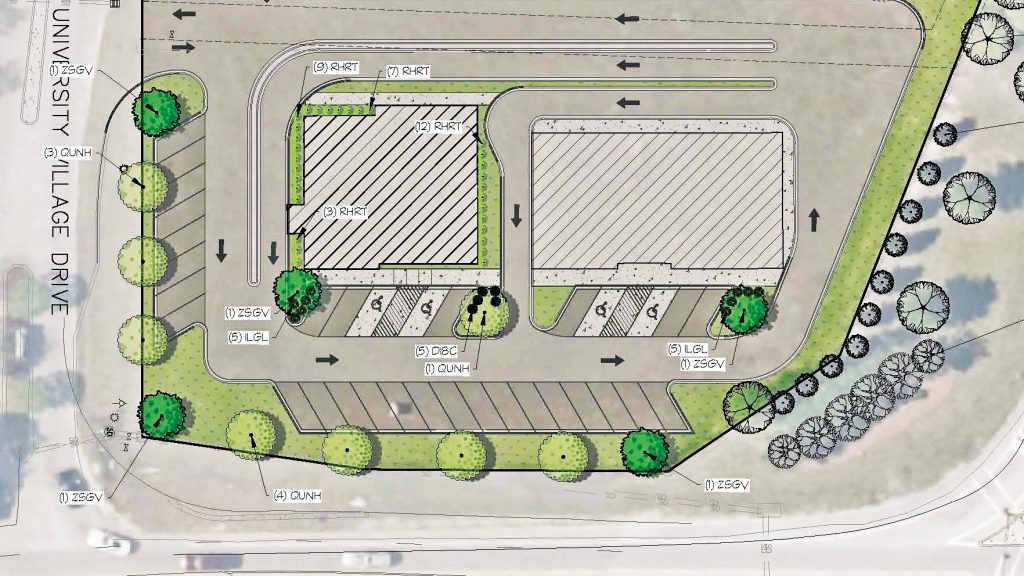

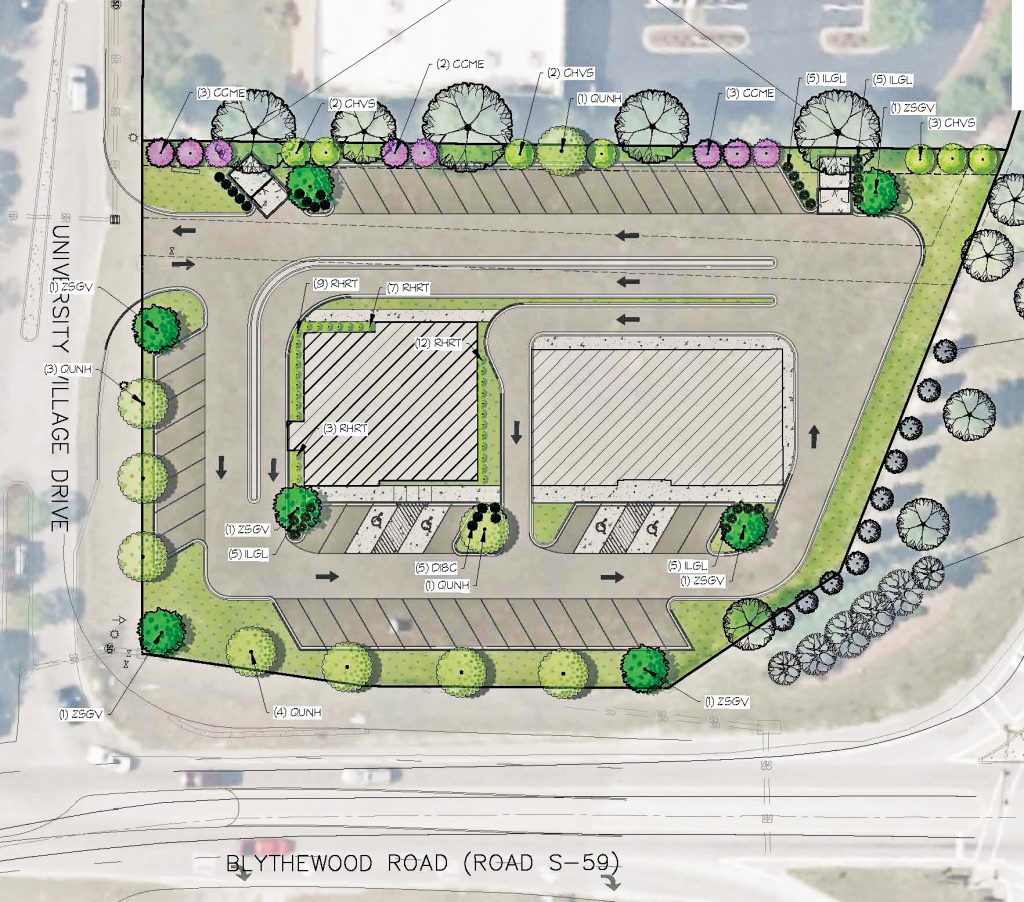
BLYTHEWOOD – Blythewood’s Board of Architectural Review on Tuesday deferred action on a certificate of appropriateness for proposed designs for two new commercial buildings planned at 702 University Village Drive. The board asked developers to revise the architecture to better reflect the town’s existing character before returning for approval.
The project, presented by representatives of The Eagle Development Group of Virginia, calls for two one-story commercial buildings in the area in front of the Food Lion shopping center and facing Blythewood Road. The buildings are intended to house a mix of restaurant, retail and service uses, including potential medical or dental offices, according to the developers.
The owner of the property is Blythewood Oil Company, Inc./Larry Sharpe.
Mike Zeigler, representing the development group, and architect Josh Creel presented renderings showing two complementary—but not identical—buildings featuring red brick, glass storefronts and stucco on the sides of the buildings. The buildings are designed with flexible tenant spaces that can be adjusted from roughly 1,200 to 3,500 square feet, and to accommodate drive-through service for future tenants.

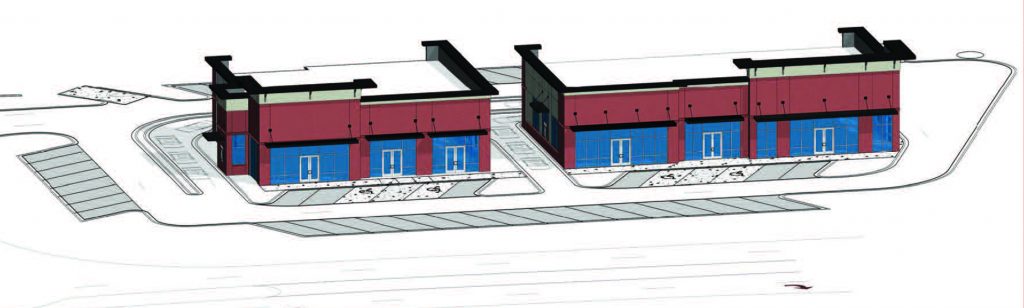
Zeigler told the board the project had already undergone multiple design revisions in consultation with town staff and the Town’s architectural consultant, Ralph Walden.
“This is probably the eighth or ninth draft,” Zeigler said.
Creel said the design is intended to tie into surrounding development while creating a cohesive look along the highly visible Blythewood Road corridor near I-77.
Board member Cindy Nord said elements of the design appeared too modern and out of character with nearby development, including the adjacent Palmetto Citizens Credit Union and other buildings in the Food Lion shopping center.
Board member Jim McLean said the buildings, as currently designed, could stand out in a negative way as a gateway into Blythewood.
Board member Sandy York said the black coping and roofline details felt “futuristic” and more reminiscent of coastal developments than Blythewood.
Nord asked for tweaks that better reflect the town’s existing architectural context.
Suggested Design Changes
During discussion, the board discussed several architectural changes it would like to see before reconsidering the project:
- Eliminate stucco on side façades, with a preference for brick as the dominant material on all sides.
- Increase brick detailing, including decorative brickwork such as soldier courses, headers or banding to add visual depth and craftsmanship.
- Reconsider roofline and coping details, particularly black or dark elements that were described as overly modern.
- Adjust color schemes, including replacing darker accents with lighter, more traditional tones.
- Ensure rooftop mechanical equipment is screened with parapets, especially on rear elevations visible from surrounding roads.
- Verify parking spaces and confirm compliance with town code.
- Refine lighting plans, ensuring all lighting is fully shielded and directed downward in compliance with town ordinances.
- Review awning styles, suggesting alternatives to flat, metal canopies that contribute to a modern appearance.
- Add brick accents at storefront bases, particularly beneath large glass sections, to better anchor the buildings visually.
Walden reminded the board that while the ordinance allows some non-brick materials, the site’s high visibility could warrant stricter interpretation of the town’s 70-percent primary material requirement.
Vote Deferred
Rather than approving the project with conditions, the board voted unanimously to defer the application and asked the developer to return with revised renderings addressing the concerns raised by the board.
Board member Jim McLean said deferral was appropriate given the site’s prominence as a gateway into town.
“I think it’s important that we try to get it right,” McLean said before the vote. “It’s the gateway into Blythewood.”
Zeigler said he is willing to revise the plans and return as early as February.
“We want to work with you,” Zeigler told the board. “What you’re asking for is not that difficult.”
The board voted unanimously to defer the application, with plans to review updated designs at the February meeting.