
The mayor-council form of government is inherently susceptible to corruption due to the concentration of power in the mayor’s office.
When one individual holds the authority to appoint key officials, make big decisions unilaterally, and prepare the budget, the risk of fraud, waste, and abuse increases dramatically. Without sufficient checks and balances, the door is left wide open for misconduct.
Recent examples have shown the vulnerabilities of this form of government. Here in Blythewood, this town has witnessed a disturbing attempt by our mayor to hire a Town Deputy Administrator who was under investigation by SLED at that time, and has since been indicted on federal charges for 26 allegations of public corruption.
When power is consolidated in the hands of one person, corruption is not just a risk; it becomes inevitable. America has no kings, only gilded men and women who we can and must hold accountable again and again.
Electing a mayor who lacks experience or the capacity to lead effectively can create significant problems for a community.
What’s crucial now, is that we look ahead.
We need a system of checks and balances to prevent future leadership failures. One proven solution is transitioning to a council-manager form of government. This structure provides professional management while ensuring that no single individual holds too much unchecked authority. It strengthens oversight and decision-making through collaboration and accountability—safeguards that are essential for effective and transparent governance.
In a town as richly diverse as ours, it’s essential that our local government reflects the voices and values of all its residents. That’s why the council-manager form of government remains one of the most effective systems for cities like ours, which is fast growing and has a wide range of cultural, social, and economic backgrounds to shape our community life.
Unlike the mayor-council form of government where executive power can rest in the hands of a single individual, the council-manager form provides for equal participation among all elected council members in both policy development and administrative oversight. This means that no single voice dominates; instead, every member of council (which includes the mayor) brings their constituents’ perspectives to the table.
For communities historically underrepresented in decision-making, this structure opens doors. It fosters dialogue, consensus-building, and shared accountability – qualities that are vital in addressing the nuanced challenges of a diverse population. By distributing power equally among elected representatives and relying on a professionally trained city manager for day-to-day operations, this form of government strikes a healthy balance between democratic accountability and administrative expertise.
As we continue to grow and evolve as a town, let us not overlook the value of a system that prioritizes fairness, collaboration, and inclusivity. The council-manager form of government doesn’t just work for us – it represents us.
We’ve seen what happens when a single individual wields unchecked authority: jobs are handed to personal acquaintances, contracts awarded without transparency, and budgets riddled with waste or misused for political gain. The council-manager system is specifically designed to prevent that. By separating politics from administration, it creates accountability, transparency, and a focus on professionalism over patronage.
We should demand a government that reflects the best of who we are – honest, inclusive, and responsible. The council-manager form helps us get there.
Good governance shouldn’t depend on luck or the hope that the next mayor will do better. We need a system that ensures sound, stable leadership — regardless of who’s elected.
No single person should be wielding unchecked power. We must ensure that decisions are made collaboratively, with transparency, and oversight.
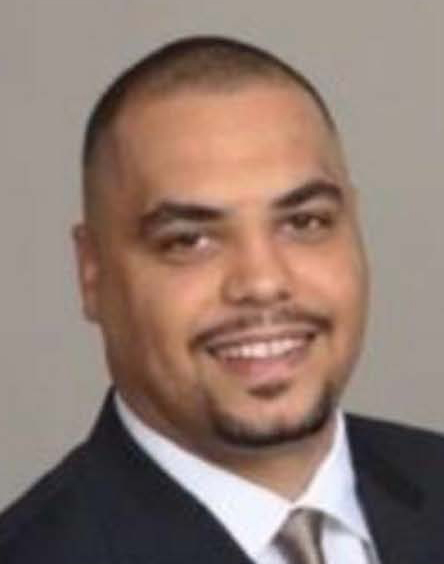
Jordan Sprenger-Wilson is a Civil Rights Attorney (MN & NC) and a Blythewood resident.