
There’s been a lot of public statements and commentary in the past few days, weeks and years about what the free speech provisions of the First Amendment mean. Some of the statements, even from those charged with enforcing the law, have been strained, incomplete or just flat-out wrong.
So, here’s a basic guide to what the courts have determined the First Amendment to mean.
The First Amendment states that “Congress shall make no law… abridging the freedom of speech, or of the press….” I will focus here only on this speech and press provision, leaving interpretation of the provisions regarding religion and those regarding peacefully assembling and petitioning the government, although they also involve speech.
First of all—and this is going to seem like a very lawyerly point—“Congress” doesn’t just mean Congress. Under U.S. Supreme Court precedent, the First Amendment applies not only to Congress, but also applies equally to the other branches of the federal government: the executive branch (the President, his staff, cabinet and administrative agencies) and the judicial branch (the federal courts). This means that any entity of the federal government, in whichever branch of the government organization flowchart it might fall, is barred by the First Amendment from “abridging the freedom of speech, or of the press.”
The First Amendment also applies to state and local government entities. This is because of language in the Fourteenth Amendment, which provides that “No State shall make or enforce any law which shall abridge the privileges or immunities of citizens of the United States; nor shall any State deprive any person of life, liberty, or property, without due process of law.” In a 1925 case, the U.S. Supreme Court concluded that because of this language, in addition to entities of the federal government not being able to impose undue restrictions on speech, neither can state government entities or other entities of government created by the states, including county, municipal and other local government entities.
This includes government entities in their role as employers. So employees of government entities get some protection from retaliation—firing or other discipline—for their speech, as long as the speech regards a matter of public concern; is made as a citizen, not as a government employee; and does not actually, or have the potential to, substantially impact the government workplace.
The First Amendment does not provide protection for employees of non-government entities. So most private employers can fire or take disciplinary action against employees for their speech, although there are a few exceptions regarding reporting illegal conditions or activities, and in some states, statements regarding working conditions and union formation. It does not matter if a private company holds government contracts.
The second lawyerly point is that while the First Amendment seems absolute, saying that “Congress shall make no law,” (emphasis added), the courts have found that government can actually impose some limitations on speech: by punishing it after it is said, or in limited cases, prohibiting it entirely. But there are only a few permitted restrictions, and they are rather circumscribed.
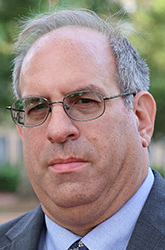
Eric P. Robinson is the Reid H. Montgomery Chair in Freedom of Information at the University of South Carolina’s School of Journalism and Mass Communications, where he teaches media and internet law as an associate professor at the USC School of Journalism and Mass Communication, and an academic affiliate of USC’s Joseph F. Rice School of Law. He is “of counsel” at Fenno Law in Charleston / Mount Pleasant. He has worked in media law for more than 30 years and is admitted to legal practice in New York and New Jersey and before the U.S. Supreme Court. This column is for educational purposes only; it does not constitute legal advice. Any opinions are his own, not necessarily those of his employers.