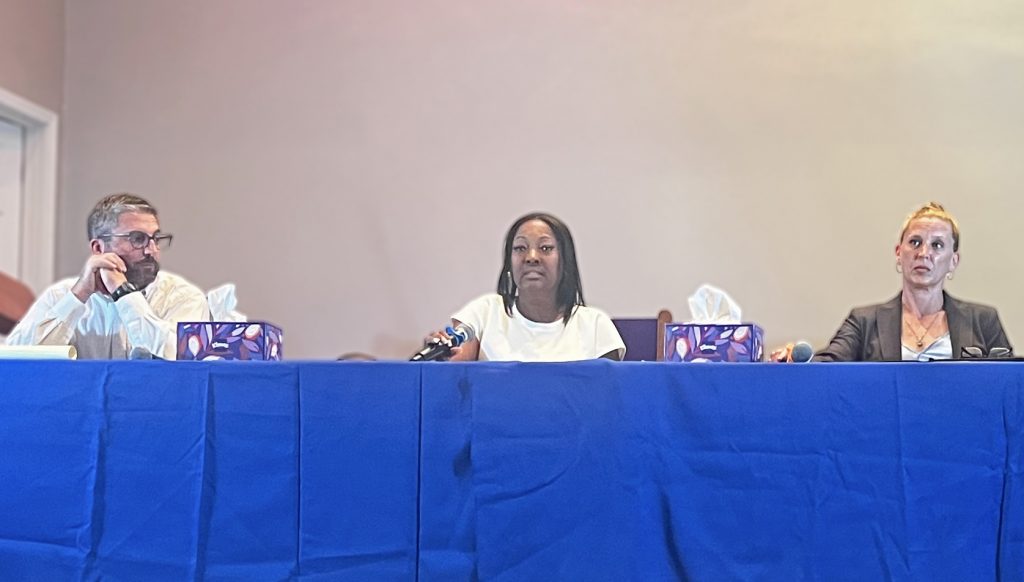
WINNSBORO – Three candidates vying for Winnsboro Town Council laid out their priorities Sept. 18 at a community forum hosted at Christ Central, fielding questions on downtown revitalization, youth opportunities, crime, and how to manage growth tied to regional development ahead of the Sept. 30 special election.
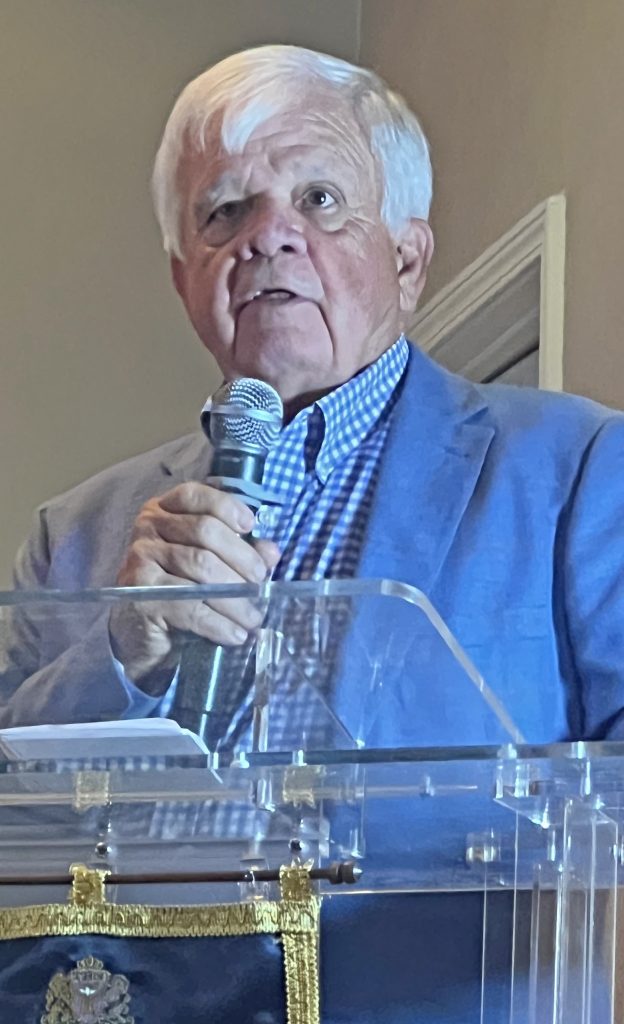
The forum, moderated by former Winnsboro Mayor Dr. Roger Gaddy and hosted by The Voice, featured Russ Brown, Trista Davis, and Kimberly Uphold. Each offered two-minute introductions, then rotated through audience-submitted questions.
Revitalizing Downtown & Courting Business
All three candidates cited Main Street’s future as a top priority.
Brown, a real estate professional and former Ridgeway councilman who has lived in Winnsboro about 11 years, said the town should “focus on the core of the town, starting at the town clock and work our way out,” adding that uniform design standards and enforcing existing codes could improve appearances and draw investment. He floated reactivating a Board of Architectural Review and creating a landlord registry “to know who owns what and who to contact if there’s an issue,” saying accountability would help convert storage-only storefronts to active businesses. “If it’s attractive, people are going to be drawn to it,” he said.
Davis, a lifelong Winnsboro resident and longtime small-business owner, pushed for simultaneously supporting existing businesses and attracting new ones, arguing that property owners must maintain buildings. She said ordinance updates—such as allowing more outdoor tables—could help make downtown feel “more appealing, more inviting. There are too many abandoned buildings,” she said. “Owners need to be responsible.”
Uphold, whose background is in community and technical colleges and grant administration, urged a data-driven, community-first approach: survey residents to identify specific needs (from a dry cleaner to an arcade) and use that feedback to guide recruitment. She also emphasized preserving historic architecture while adding housing that brings customers downtown: “It’s a balancing act of growing but not overgrowing.”
On what would thrive on Main Street, Davis suggested a bakery/ice cream concept with flexible, seasonal offerings; Uphold mentioned a tavern with indoor-outdoor seating and reiterated surveying residents; Brown said improved streetscapes would organically attract a variety of shops.
Crime, Cameras and Public Notifications
Candidates were asked how to address crime and how citizens should be alerted during active incidents.
Davis linked some offenses to “idle minds,” calling for more youth activities, anonymous reporting options, and consequences for repeat offenders. “We need to hold people accountable…not just allowing them to get out without any consequence,” she said.
Uphold referenced a recent public safety presentation to council and said if prosecutions lag, the community should “hold elected officials accountable,” including contacting legislators and the solicitor’s office. She supported grant-funded tools or an app to alert residents in real time: “I would love to see something put in place…so citizens can be alerted.”
Brown noted the town’s network of license-plate and security cameras can help solve cases, but prevention and successful prosecution depend on “building the right cases.” He suggested improving law enforcement investigations and echoed that real-time alerts are hard to execute during unfolding events, urging neighbors to communicate and monitor official channels.
Growth, Utilities and Zoning
With development pressure rising—spurred in part by activity around the Scout Motors plant in Blythewood—candidates were asked how they feel about growth and how it should be serviced with water and sewer.
All three said growth is necessary but should be guided.
Davis said water improvements are already being installed along U.S. 321 and urged robust community forums to shape future neighborhoods: “Our town is in desperate need of this development… but still protect the history of the community.”
Uphold said the town is currently working through a planning framework that addresses utilities, lot sizes, green space and housing types; a recent vote on zoning text was delayed to consider developers’ feedback on frontage/garage ratios. She encouraged residents to review the plan and attend meetings.
Brown said annexations and a comprehensive plan are moving forward and stressed enforcement of standards: “You want to maintain our small-town appeal, but at the same time you want to have more jobs… You’re not going to have that with a decline in population.”
On whether fixing up a building and then paying business taxes amounts to “double taxation,” Davis said she doesn’t see it that way if revenues are used to help the town thrive. Uphold called most businesses and property taxes separate and necessary for services. Brown said tax increases follow increased value, but suggested exploring relief or incentives while pushing for owner accountability.
Regarding the new zoning/comprehensive plan, Uphold favored letting the citizen committee refine the draft before adoption; Brown said council should “lean heavily” on the Planning Commission’s recommendations while applying them case by case across residential, commercial and industrial areas; Davis said she would not approve the plan “as is,” noting ordinances often require revision to get them right.
Closing Appeals
Brown said he wants to help council notch “a few small wins” to build momentum: “If we don’t capture some of what’s happening nearby, we could miss the boat.” He urged residents to vote and stay engaged.
Davis focused on civic participation and youth: “Our children need something to do. If funding isn’t here, then funding should be brought here,” she said, calling for respect, accountability and a shared effort to make Winnsboro “thriving again.”
Uphold pledged to make residents’ priorities her priorities, citing grant-writing and fiscal experience: “I care about the kids… and I want my son to want to stay in Winnsboro. That’s not going to happen unless we make changes—programs for teens, family activities, career opportunities, and revitalizing downtown.”
The special election is set for Tuesday, Sept. 30.